About
One firm, built to hold both constraints
Bentinck Street is deliberately small. Engagements are led by the two of us personally, taken on in limited number, and bounded in writing before they begin. The people who diagnose your transformation are the people still answerable for it in month seven.
Two builders. One firm.
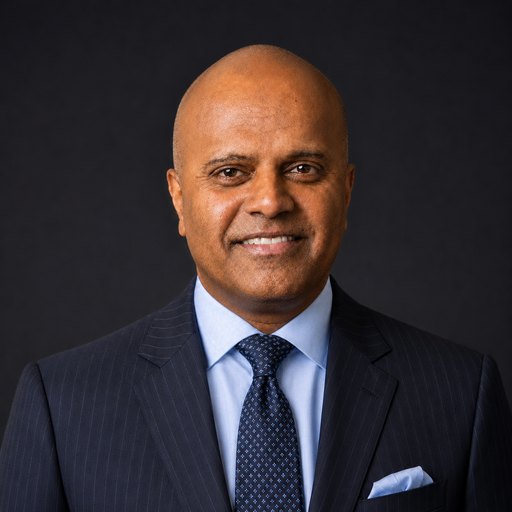
Fifteen years in investment-banking engineering, including a decade at Goldman Sachs, latterly as an Executive Director across Zurich, London and New York. Fifteen more building, operating and advising across startups, fintech and enterprise technology: technology strategy inside Barclays' $800M Change-the-Bank programme, an eighty-person product organisation restructured at Temenos, and a commerce platform built from zero as co-founder and CTO. Builder of STRATUM and 21A2, governed AI infrastructure running in production with three US patents pending. Author of eight titles on institutional change.
Zia leads governed execution and modernisation: proving what the AI did, under whose authority and why, while modernising legacy platforms without stopping the institution.

Twenty-five years building digital products, platforms and the commercial operations around them: two companies founded, digital head of a $10B insurance division, five granted US patents. The AI work predates the generative era, from social-data prediction filed in 2012 to computer vision in commerce. It now spans multi-model platforms for Fortune 50 clients, a global brokerage's marketing transformation, and an AI layer inside a South Asian conglomerate's planning cycle. ADKAR-certified.
Mushter leads AI strategy and adoption: the operating models and rubrics that decide what to build, and the champions, fluency and change programmes that make it stick.
Backgrounds and reference conversations can be arranged directly with the people who need them.
What the partnership brings
Regulated-industry depth
Banking, payments, insurance, healthcare and financial services. The standard of evidence is the one that survives a central bank, an auditor and a board.
Built, not only advised
The principals have built and run production AI systems, so the advice rests on systems we have shipped rather than systems we have read about. What that infrastructure is, and how it relates to the firm, is set out below.
Published doctrine
Eight Clarkehouse Press titles on institutional change and AI governance. The method is written down and can be read before you hire us.
Delivery across time zones
A US and Asia working model directed by the principals rather than subcontracted and supervised at a distance.
The leapfrog thesis
Emerging-market enterprises can design an AI-native operating model from the start, instead of retrofitting one the way Western incumbents must. Where that is the situation, it changes the sequence of the work.
Built infrastructure, and what it is not
Bentinck Street is the transformation firm. STRATUM and 21A2 are separately developed execution capabilities that show parts of the method working in production. Neither is required for an engagement, and no engagement depends on either being adopted. Where one is a candidate, we disclose the interest in writing, assess the alternatives beside it, and state the commercial terms before you decide.
The governed execution layer: reads a legacy estate from source, identifies the safest first move, runs old and new side by side, and produces evidence a risk function can inspect.
Operating memory: holds how an organisation actually runs, lets governed agents act on it under human authority, and records every action with the provenance to trace it back.
Why Bentinck Street
Two streets, an ocean apart.
On the London one, in a house at No. 7, Edward Gibbon wrote The Decline and Fall of the Roman Empire, still the most careful account ever written of how a great institution fails. His conclusion was structural: institutions rarely fall to their enemies. They fall when their operating model stops fitting their circumstances, and no one holds the authority to change it.
The Kolkata one has never produced a theory of anything. It has been a working commercial street for two hundred years (tailors, traders, moneychangers) adapting without ceremony through every empire, technology and crisis that has passed over it. It practises what Gibbon only diagnosed: survival through continuous, unsentimental adjustment.
Our firm stands on both streets, and so does each of us. We have worked inside the institutions: Goldman Sachs, Barclays, a $10B insurance division, the systems through which the world's money moves, where failure is structural and evidence is everything. And we have built from zero, together: we co-founded Shoplandia, one of us as CEO leading product, the other as CTO building the platform, where survival is a daily practice rather than a theory.
We named the firm for the street that explains why institutions fail, and for the street that shows how enterprises endure.
That is the work: the diagnosis and the practice, held together, as it has been between us for more than a decade.
The firm
Bentinck Street. Operating across Bogotá · Dhaka · London · New York. We treat initial correspondence as confidential. Formal confidentiality, data-handling and indemnity obligations are agreed in writing before substantive work begins.
A consequential question deserves a conversation.
Tell us what your institution is trying to change. You will speak directly with the principals who would lead the work.
Begin a conversation