AI Transformation for Regulated Enterprises
Enterprises adopting AI fail in two places at once, and the two are almost always sold separately. We built one firm to hold both.
The first failure is in the core: legacy systems that cannot be switched off, execution nobody can account for, numbers a board does not trust. The second is at the edge: initiatives multiplying without discipline, and teams that never change how they actually work.
Most AI advisory falls on one side of a line. Technology firms modernise the core: systems, data, execution. Adoption becomes someone else's problem. Strategy firms design operating models and change programmes, then hand the hard engineering back to you. The transformation fails in the gap between them.
Bentinck Street was built for that gap. One principal has spent twenty-five years inside institutional banking and payments. He builds the systems that record what an AI did, under whose authority it acted, and on what grounds, so that a board, an auditor or a central bank can inspect the answer. The other has spent twenty-five years building digital products and commercial operations, and now designs the operating models and change programmes that make AI adoption stick, from a Fortune 50 global marketing organisation to a South Asian conglomerate's planning cycle.
We deliver governance as one connected capability: from the decision (which initiatives, in what order, by what rubric) through execution, to the evidence of what the AI did and under whose authority. In practice that means an executive can take any AI-produced outcome and trace it back: which rubric approved the initiative, who authorised the action, what evidence supports the result. That trace, end to end, is what we build.
That is also the structural difference from a large firm. The two people who diagnose your transformation are the two people who deliver it, and the result is measured against your own numbers rather than ours.
The operating model decides what technology can do. The rubric precedes the pilot; the diagnosis precedes the build.
Governance is not what slows AI down. It is what lets a large organisation move faster, because executives know who approved what, on what evidence, and how to reverse it if they are wrong.
The test at the end of an engagement is simple: what changed against your own baseline numbers, shown in evidence a board or supervisor can inspect. The capability that produced the change stays with your people.
This is the constraint we design against, not a promise we make at the end. If a framework only functions while we are in the room, we have built the wrong thing. Every structure on this page is meant to be handed over and run by your own people.
If one of these reads like the inside of your organisation, that is the conversation to have.
Three engagements, each led personally by the principals, bounded in writing before it begins, and priced to an outcome rather than to hours. Most relationships begin with a diagnosis, because the rubric precedes the pilot. Each engagement ends in a decision product, not a deck, and the result is measured against your own baseline.
A focused examination of the problem beneath the visible problem.
Read the engagement02The redesign of the machinery the diagnosis found wanting.
Read the engagement03Direct senior support inside a consequential decision or transition.
Read the engagementThe honest answer is that a global firm brings bench depth, procurement familiarity and someone to escalate to. What it rarely brings is the two people who sold the work still doing it in month seven. Fifty years of institutional experience are in the room for the whole engagement, which is also why we take few of them at a time.
All six terms of engagementThose three are how a relationship begins. This is the thread that runs through all of them.
Most firms sell AI governance as a single undifferentiated service. We deliver it as one connected capability.
Most AI portfolios are a list of things somebody was enthusiastic about. A decision rubric is what lets a board fund one initiative and stop another on stated grounds, and it is what turns AI sprawl into a managed portfolio. The rubric precedes the pilot.
Core modernisation and migration sequenced around a business that has to keep trading, alongside the platform and workflow builds. STRATUM and 21A2 as governed-execution infrastructure, and production GenAI architecture (retrieval, agentic workflows, multi-model platforms) already running on live mandates.
A provenance record, a documented exception register, reconciled numbers and a runbook: evidence that survives a central bank, an auditor and a board. Results measured against your own baseline rather than a vendor benchmark, and enough for you to take the decision yourself and defend it afterwards.
One governance thread, running from boardroom intent to inspectable result.
Structure first. Governed at the core. Adopted at the edge. Proven against your own baseline.
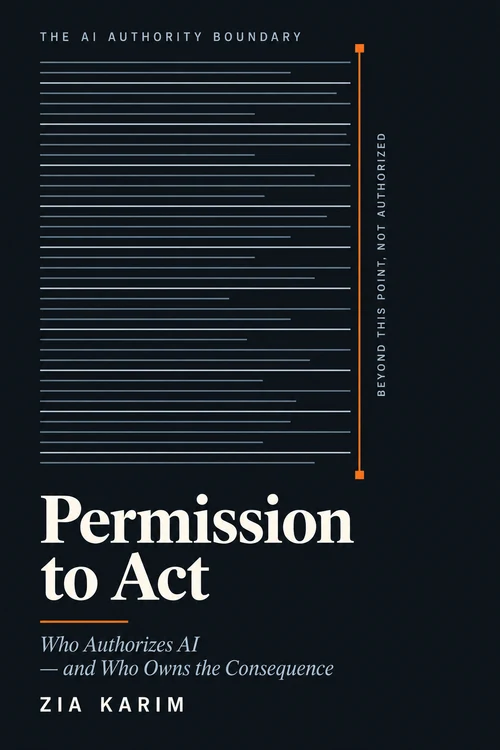
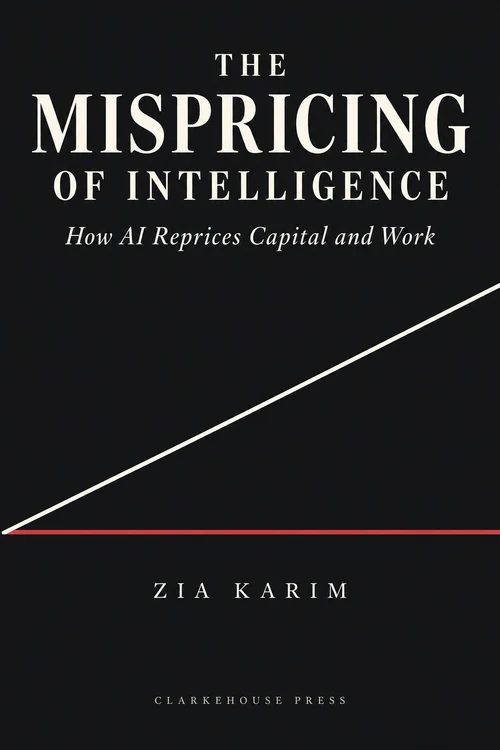
The frameworks underneath the work (governed execution, the AI use boundary, structural saturation, the AI-native operating model) are written down and can be read before you hire us. A firm asking to be trusted with consequential questions should show its reasoning in public. These two are where the argument starts.
When execution is cheap, control decides the outcome. Why governance, not capability, is becoming the scarce asset in enterprise AI.
Judgement and boundariesWhere AI extends judgement, and where it must not. The dividing line every board should be able to state in one sentence.
The full catalogue is at clarkehousepress.com, and the argument continues on our Perspective page.
A global marketing organisation with twenty-plus AI initiatives across seven regions, and no reliable way to say which of them mattered.
An operating model, governance rubric and change programme for the whole portfolio, giving the leadership a way to fund, challenge and stop initiatives on stated grounds.
A diversified group's annual planning cycle, running on assembled spreadsheets and assertion.
An AI layer over the group's business planning: structured challenge of every business unit's plan, financial reconciliation, live cashflow scenarios and board reporting, with every target and every decision kept in human hands.
A governance, risk and compliance practice advising institutional clients across London and the EU, whose operational-risk guidance reached those clients as reports and periodic reviews.
Platforms built for the practice to serve its own clients, putting operational-risk recommendations at the point of use and deriving each one from that client's internal policies, data practices and ways of working.
The fuller record, including what constrained each situation and what came of it, is on Selected work.
Fifty years between us inside the institutions this work concerns. Every engagement is led by the two of us directly, which is most of what is being bought.

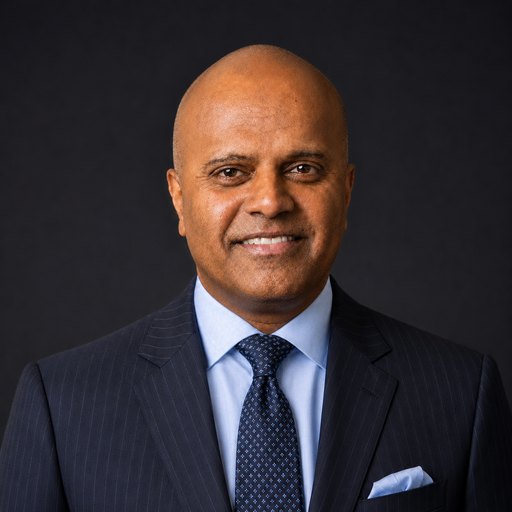
Twenty-five years inside institutional banking and payments: a decade at Goldman Sachs, technology strategy inside Barclays' $800M Change-the-Bank programme, a product organisation restructured at Temenos. Builds governed-AI infrastructure and has published eight titles on institutional change.

Twenty-five years building digital products and the commercial operations around them: two companies founded, digital head of a $10B insurance division, five granted US patents. Leads AI strategy and adoption from Fortune 50 platforms to a conglomerate's planning cycle.
Fuller backgrounds are on the About page.
We take on a small number of engagements at a time.
If your institution is somewhere between AI ambition and AI evidence, that is the conversation this firm is built for. Write to either of us and we will tell you plainly whether it is work we should be doing.
Begin a conversation